OPTICAL & INSTRUMENTATION SERVICE
The Optics and Instrumentation group was established in 2022 and is led by Nunzia Savoia (CNRS Research Engineer).
The group's missions are multiple and varied:
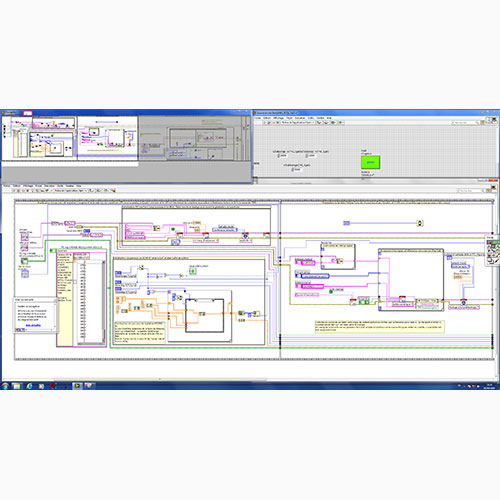
- contributing to the laboratory's projects in optics and instrumentation: design of data acquisition devices, definition of control systems and human-machine interfaces, development of several fibre laser chains;
- setting up an "Opti-thèque", a service aimed at pooling, in a sustainable development perspective, passive and active optical components and characterisation devices;
- carrying out maintenance of vacuum pumps and electromechanical components.
The group comprises 3 permanent staff members (Research Engineer, Study Engineer, and Technician):
- 1 Research Engineer: Nunzia SAVOIA (group leader)
- 2 Study Engineers: Denis BACQUET and Laurent HAY
Activities and skills
Scientific instrumentation lies at the heart of the experimental activities of PhLAM's teams. Part of the Optics and Instrumentation group primarily develops and operates experimental devices within the framework of multi-year projects with the laboratory's researchers.
Since 2023, this group has been developing the Opti-thèque project within the laboratory, which aims to pool passive and active optical components, measurement instruments, etc., as part of a sustainable development approach. In the context of implementing and monitoring instrumental projects, this group also brings its expertise in research quality management (N. Savoia). This approach supports and structures the laboratory's thinking through a cross-cutting and transparent framework. This activity is carried out using a process-based methodology built on colleagues' participation, employing collective intelligence tools with the aim of co-constructing a "quality reference framework" for the laboratory.
Achievements
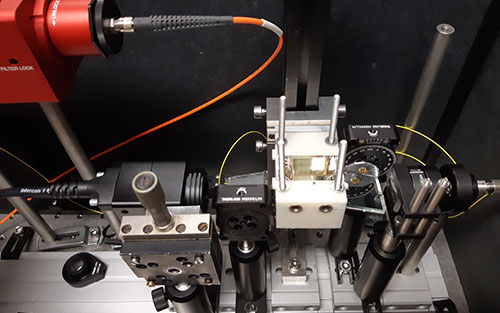
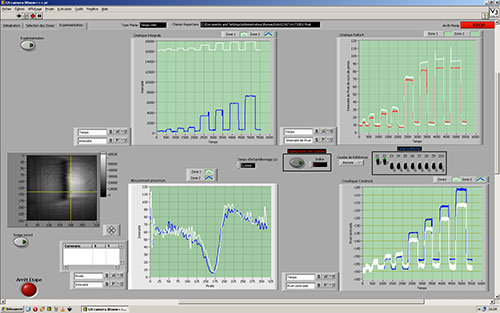
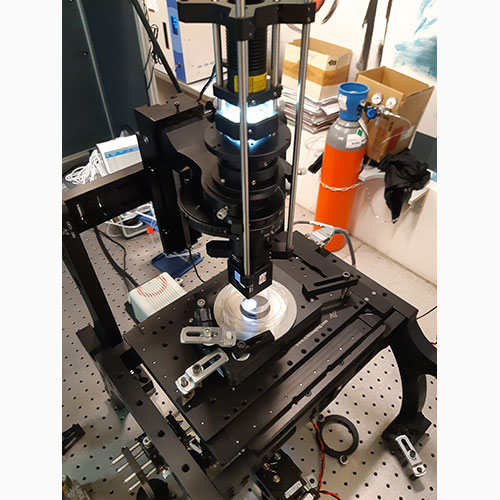
Some members of the group have contributed to projects in collaboration with the Quantum Systems, MPI, Photonics and DYSCO teams: development of a second-harmonic generation laser chain to deliver pulses of several hundred watts over 10 ns (ANR MANYLOK); development of a high-resolution X-ray radiation measurement system; interfacing and signal processing of a biosensor designed for the detection of pathogenic elements and the monitoring of treatments in the phytosanitary field (InterReg Biosens); development of an X-ray radiation measurement system (ANR Fidelio); measurement and analysis of rotational spectra of biogenic volatile organic compounds (Labex CAPPA and CPER Climibio); and conducting tests to improve the efficiency of Jurkat cell photoporation.
One member of the group carries out maintenance work on high-vacuum equipment (pumps), as well as on electromechanical components associated with the instrumentation of the PMI and Photonics teams.
In February 2022, Nunzia Savoia created a working group (WG) within the OPAL network, which she leads and which focuses on quality in optics research. This WG fits within the typical approach of CNRS professional networks, namely the sharing and dissemination of knowledge and know-how and the exchange of experience, but with a new objective: to harmonise certain professional practices with reference to the ISO 9001:2015 standard. The aim of this WG is also to create tools to be made available to network members and, after a testing and validation phase, to publish them as open-access resources on the OPAL network website. Each working session of the WG is designed by Nunzia Savoia in the form of a participatory workshop using collective intelligence tools.
- INTERREG BIOSENS Project: Interfacing and signal processing of a biosensor designed for the detection of pathogenic elements and the monitoring of treatments in the phytosanitary field.