EUROPE & INTERNATIONAL
Team: DYSCO
PhLAM Project Manager: Eléonore ROUSSEL
Partners: IJCLAB (Orsay), Pecs University (Hongrie), DESY (Allemagne), CSIC (Espagne), PhLAM, et deux compagnies privées : ITEOX et Radiabeam
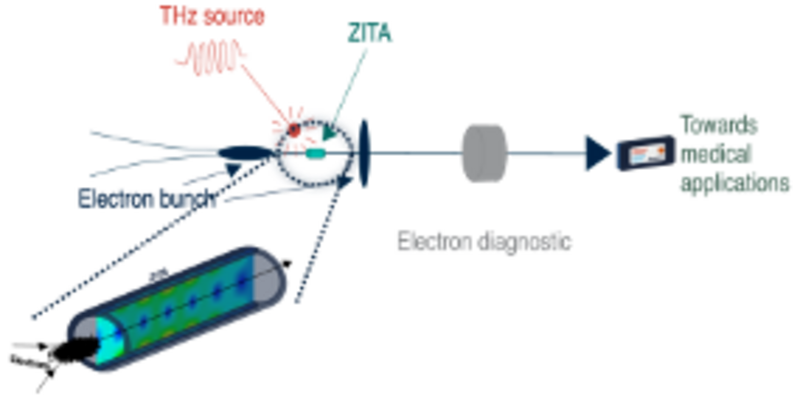
Abstract: Particle accelerators are used in a wide variety of applications, ranging from fundamental physics to medical applications such as radiation therapy. However, their size, cost, and environmental impact pose a growing challenge. The TWAC project aims to explore innovative acceleration methods using THz waves to develop compact accelerators measuring just a few centimeters. In this context, the EIC TWAC project proposes a hybrid accelerator combining a standard RF photoinjector and a dielectric structure excited by an intense sub-THz field, in order to produce ultra-short relativistic electron bunches (a few tens of femtoseconds) with peak currents on the order of kA.
DYSCO’s “Accelerator Dynamics” team is involved in developing the state-of-the-art diagnostics required for the experimental characterization of ultra-short electron bunches as well as the accelerating THz field (drawing on the group’s experience in ultrafast single-shot diagnostics). The team also contributes to the fundamental aspects of the THz wave acceleration process, including numerical studies of these mechanisms.
Team: Photonics
PhLAM Project Manager: Alexandre KUDLINSKI
Partners: Fastlite, Amplitude, InPhyni, Femto-ST, Jenlab, UITM, FAU
Abstract: The medical and consumer electronics markets are driving demand for powerful, compact, high-quality, and cost-effective femtosecond (fs) lasers. These ultrashort (US) lasers are essential in ophthalmic surgery, stent manufacturing, OLED pixel post-processing, and smartphone machining. In scientific research, they are used for multimodal nonlinear optical microscopy, the generation of high-energy coherent radiation, particle beam production, and the study of dynamic charge transfer in materials. Global competition among UL manufacturers is therefore intensifying. The VISUAL project aims to strengthen industrial leadership through an innovative UL platform, designed according to a “design-to-cost” model, offering unprecedented technical versatility. This high-average-power platform will deliver ultrashort pulses on demand, at high repetition rates (60 MHz) and across a broad spectral range. It will be evaluated for bioimaging and label-free medical diagnostics, on-chip particle acceleration, and advanced microstructuring of fibers and glass. VISUAL thus opens up new possibilities for versatile scientific, medical, and industrial applications.
Team: Photonics
PhLAM Project Manager: Francesco DE LUCIA
Partners:
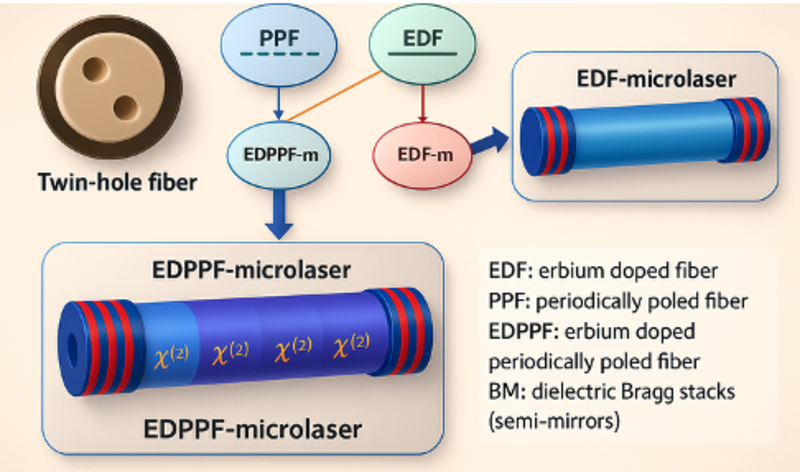
Abstract: The project aims to design and optimize a new ultrafast light source based on frequency combs generated in a fiber-based Fabry-Perot microlaser. This cavity relies on an erbium-doped, periodically polarized fiber, combining second- and third-order nonlinear effects with optical gain to produce stable, high-power active solitons at terahertz repetition rates. Three components are planned: the realization of an initial all-fiber microlaser exploiting cubic nonlinearity; the development of an advanced version also incorporating quadratic nonlinearity; and finally, the exploitation of these sources for applications in microwave photonics.
Team: Photonics
PhLAM Project Manager: Arnaud MUSSOT
Partners:
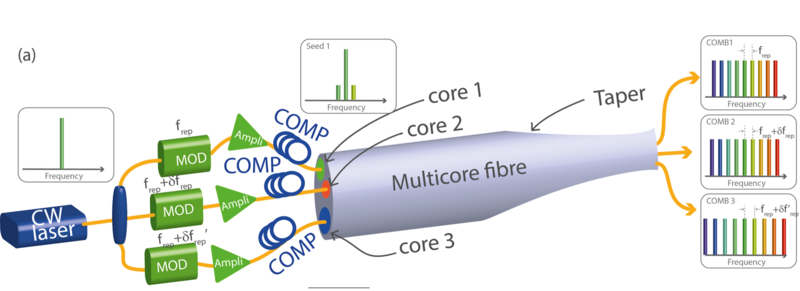
Abstract: Collaboration avec Hervé Rigneault (Institut Fresnel) expert en imagerie Raman cohérente. L’objectif final de ce projet sera de réaliser un microscope d'imagerie ultra-sensible capable de générer des images hyperspectrales à partir d’une source tri-peignes à ultra-haut débit (10 GHz) pour passer d’images statiques à des enregistrements dynamiques.
Team: DYSCO
PhLAM Project Manager: Alberto AMO
Partners: CSIC (Espagne), INO-CNR (Italie), CAS (République Tchèque), CNRS (France)
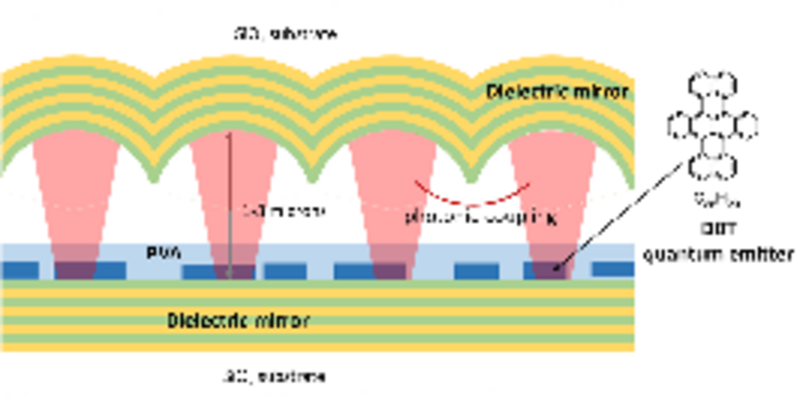
Abstract: Light-matter interfaces are fundamental to quantum technologies. At the level of a single emitter, they enable photon-photon interactions that are crucial for quantum computing. With multiple emitters, photon exchange leads to long-range interactions—which can be harnessed for quantum simulation—and super/subradiance phenomena that significantly enhance quantum memories.
However, current platforms struggle to fully exploit these collective phenomena due to limited tunability. This project aims to build and demonstrate the potential of a new versatile interface, named MOLAR (MOLecular LAttice quantum electRodynamics). It will combine molecular emitters designed by CNR-INO and photonic lattices in an open cavity developed by PHLAM, with the theoretical expertise of CSIC and CAS.
Team: Photonics
PhLAM Project Manager: Saliya COULIBALY
Partners: Université du Chili (Santiago)
Abstract: The LAI ALMA project aims to revolutionize the forecasting of extreme events through advances in artificial intelligence. By leveraging machine learning algorithms and diverse datasets, ALMA seeks to develop accurate predictive models capable of identifying the precursors and mechanisms associated with various types of extreme events.
Through interdisciplinary collaboration, the project will validate and refine these models to improve the reliability of forecasts. Ultimately, ALMA intends to implement early warning systems and decision-support tools designed to mitigate the impacts of these phenomena and strengthen societal resilience.
The project’s outcomes aim to represent a major advance in the understanding and management of unpredictable and potentially catastrophic extreme events on a global scale.
Team: MPI
PhLAM Project Manager: Bertrand CHAZALON
Partners: PhLAM (France), University “G. d’Annunzio” of Chieti-Pescara (Italie)
Abstract: The H2CLAIRE project aims to develop a new generation of hydrogen storage devices based on the use of clathrate hydrates, a crystalline form of water capable of trapping gas molecules within molecular cages. This technology offers significant advantages in terms of safety, moderate operating conditions, and environmental compatibility, particularly for stationary hydrogen storage or space applications. However, two major obstacles limit its deployment: the slow kinetics of hydrate formation and their moderate experimental hydrogen storage capacity (~0.5%), far below the expected theoretical values (3–4%). H2CLAIRE proposes an innovative approach combining two complementary promotion strategies: (i) the use of water-based nanoemulsions as kinetic accelerators, developed by the GHF group (G. d’Annunzio University, Italy), and (ii) the integration of graphene-based materials as heterogeneous nucleation promoters. These two approaches aim to simultaneously improve the formation rate, stability, and hydrogen filling rate of the hydrate cages. The overall objective is to achieve a storage capacity of 3–4% by mass, while maintaining operating conditions compatible with practical integration (T ~280 K, P ~10 MPa).
Team: DYSCO
PhLAM Project Manager: Alberto AMO GARCIA
Partners: PhLAM
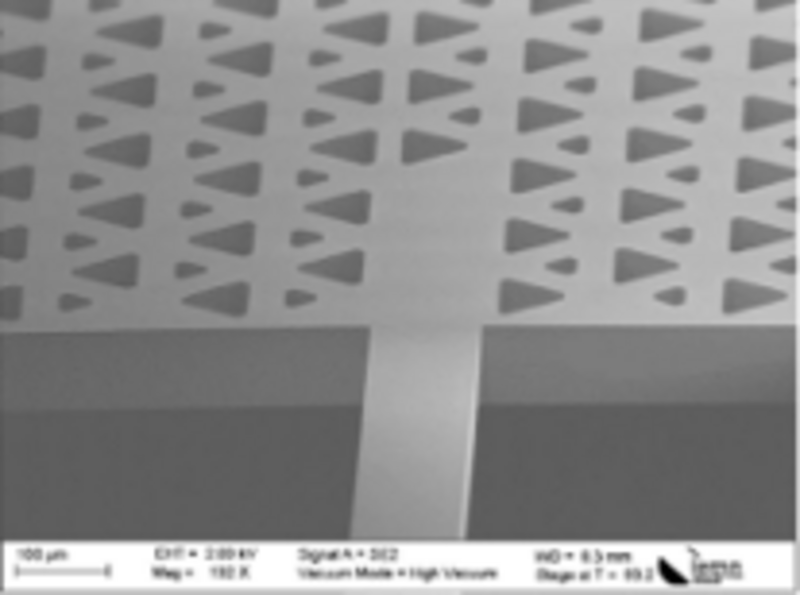
Abstract: Recent advancements in terahertz (THz) technology have unlocked the potential for ultra-high-speed wireless communication, with data rates far surpassing those of current 5G systems. Operating in the 300–600 GHz range, future 6G systems could enable wireless transmission rates of up to 1,000 gigabits per second, revolutionizing applications such as metropolitan networks and uncompressed video transfer. However, current THz technologies face challenges, particularly in demodulating high-frequency signals.
In this project, we propose developing an on-chip topological coherent demodulator for THz signals using topological photonic crystals, which exhibit robust, low-backscattering wave propagation. Leveraging the valley Hall effect in photonic crystals, the device will feature waveguides, beamsplitters, mixers, and balanced detection outputs, integrated on a silicon chip. This all-optical architecture offers a significant improvement over traditional electronics-based systems, with a target demodulation bandwidth exceeding 50 GHz for signals at 300 GHz.
Team: Photonics
PhLAM Project Manager: Alexandre KUDLINSKI
Partners: Euro-Bioimaging, Maastricht Univ., Lightcore, Univ. Turku, BF Educational, VRVIS, Univ. Teramo
Abstract: Sustainable agricultural strategies are essential in the face of growing global food demand. Current technologies apply nitrogen fertilizers effectively but lack precision, leading to nitrogen leaching and ecological and economic losses. The RE-IMAGINE-CROPS project proposes to apply fundamental plant biology to crop management through quantitative in situ measurements at the tissue and cellular levels. It will develop the first portable, multimodal, and multiscale technology combining PET and multiphoton endoscopy (ME) in real time. PET will measure metabolic processes at the scale of hundreds of micrometers, guiding MPE to visualize functional mechanisms at the cellular level. The goal is to precisely tailor fertilizer application by measuring local and systemic signaling pathways activated by nitrogen. The project integrates real-time PET reconstruction, hydrodynamic modeling, fiber optics, and multi-scale identification. It offers exceptional spatial resolution (0.6 mm to 1 µm) and a frame rate of (2 to 10 Hz) thanks to the ⁸⁹Zr-labeled Lifeact-Venus tracer. Eight institutions are participating, including EURO-BIOIMAGING ERIC and BFEDU, to maximize scientific and industrial impact in Europe. RE-IMAGINE-CROPS could transform sustainable crop management and support EU priorities in agriculture.
Team: Photonics
PhLAM Project Manager: Laurent BIGOT
Partners: ISCTE, XLIM, Univ. Valencia, Univ. Stuttgart, IT, DTU, Heraeus, Infinera, The Hebrew University of Jerusalem
Abstract: MATCH is a doctoral training network funded by the European Commission under the Marie Skłodowska-Curie Actions (MSCA) Doctoral Networks 2023 program, and proposed by a multidisciplinary and cross-sectoral consortium of international experts.
MATCH focuses doctoral research on multi-core fiber (MCF) technology; MATCH aims to develop a cutting-edge solution to adapt future fiber-optic communication networks to new information capabilities, while offering the potential to reduce costs, lower energy consumption, and significantly increase network capacity.
Team: DYSCO
PhLAM Project Manager: Abdelmajid TAKI
Partners: PhLAM, Lille, France ; Riga Technical University, Lettonie ; Military University of Technology, Pologne, Warsaw University of Technology, Pologne
Abstract:
The project is dedicated to the development of new multifunctional materials for nonlinear photonics and low-frequency terahertz (THz) devices, as well as to the development of new advanced applications in these fields. The implementation of new HLC (Hybrid Liquid Crystal) elements will lead to a transition to a new level of capabilities, namely:
- switching times will be significantly reduced and the cost of the elements will be lowered by 30 to 50%
- creation of independent elements and devices in the field of optoelectronics
- design of new fast and efficient LC devices in the low THz range (0.2–0.4 THz)
- new strategies for post-silicon materials and chipless applications by implementing a novel generation approach based on the noise of stable spatiotemporal structures.
The project will contribute to groundbreaking scientific knowledge in the field of new materials for optical and THz photonics, which include nano/microstructures and exhibit significantly improved performance. The technologies, materials, and components developed can be implemented by photonics and microelectronics companies, as well as by small and medium-sized enterprises (SMEs) producing photonic components and beam control devices for various optical ranges.
Team: DYSCO
PhLAM Project Manager: Sierge BIELAWSKI
Partners: DESY - DEUTSCHES ELEKTRONEN SYNCHROTRON
Abstract: FCA: In 2022, PhLAM and DESY decided to strengthen their existing collaboration by establishing a Framework Cooperation Agreement between the CNRS, the University of Lille, and DESY. This framework facilitates collaborative projects between CNRS laboratories and DESY in a streamlined manner, covering funding, equipment use, knowledge transfer, and more. Each project is—technically—an appendix to the FCA, defining the objectives, deliverables, and resources deployed. It should be noted that the scope of the FCA extends beyond the PhLAM-DESY collaboration and covers potential collaborations between the CNRS and/or the University of Lille and DESY in general.
Appendix 1: The first project (Appendix 1) concerned the PhLAM-DESY collaboration on the topic of ultrafast measurements in the terahertz range using photonic methods. This project led to new analytical methods, enabling real-time measurement of the shape of relativistic electron bunches with a resolution below 200 femtoseconds (currently being implemented on the FLASH and European XFEL free-electron lasers). One of the project’s follow-ups involves participation in the development of the STERN project at European XFEL and the DARI project at HZDR (Dresden).
Team: PCMT
PhLAM Project Manager: Céline TOUBIN
Partners: Laboratory of Environmental Chemistry (Suisse), CEA Saclay (France)
Abstract: This project is based on close collaboration between theorists and experimentalists with the aim of better understanding the fundamental processes at interfaces of atmospheric interest. The availability of species at the interface is indeed critical for heterogeneous chemistry, as it significantly influences the composition of the gas phase and also helps identify the rate-limiting processes. The core of the project lies in combining X-ray photoelectron spectroscopy (XPS) with molecular-scale simulations to distinguish these effects. XPS spectroscopy provides the most chemically selective information about the interfacial region. Molecular-scale modeling, in turn, provides nanoscale information on the distribution of species within the particle and also allows for the determination of core or valence electron binding energies comparable to those obtained by XPS technology. The influence of the surface state (organized like crystalline ice at low temperatures, quasi-liquid, or liquid) on the adsorption and diffusion of species is also a factor that can be studied.
Team: DYSCO
PhLAM Project Manager: Sierge BIELAWSKI
Partners: DESY (Hamburg), HZDR (Dresden), KIT (Karlsruhe), PhLAM (LIlle)
Abstract: The primary objective is to explore new photonic methods for recording ultrafast signals (particularly in the terahertz range) in real time and in a “single-shot” manner. A primary motivation is a significant need among users of large-scale instruments such as free-electron terahertz lasers to perform pump-probe experiments (technically, the creation of “frequency combs”). This need has led to the launch of major projects around the world, including STERN (at the European XFEL—which already includes the CNRS as a partner) and the DARI project (at HZDR/FELBE in Dresden). This IRP will explore the challenges of real-time terahertz measurements, which are bottlenecks in these projects, but will also aim to explore ultrafast THz measurements in general. In addition to access to major large-scale instruments (at European XFEL and FELBE), it provides PhLAM with access to unique expertise and technologies, such as the ultrafast imaging systems developed by the Karlsruhe Institute of Technology.
Team: DYSCO
PhLAM Project Manager: François COPIE
Partners: PhLAM (France), King’s College London (Royaume-Unis)
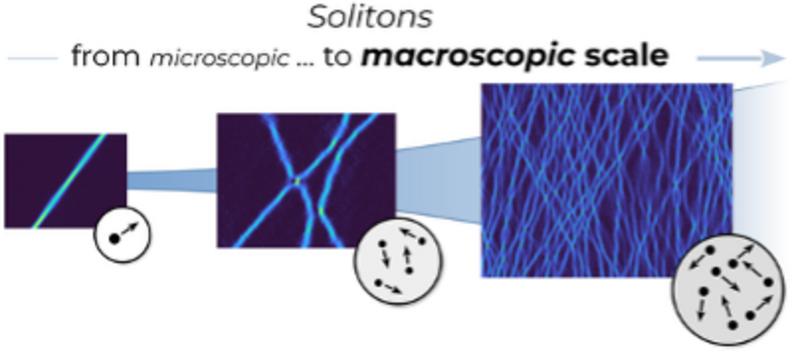
Abstract: The GHyPhot project aims to explore the emergent collective dynamics in gases of optical solitons, linking the microscopic scales of individual interactions to the macroscopic description derived from generalized hydrodynamics (GHD). A soliton is a nonlinear wave that propagates without distorting, thanks to a balance between dispersion and nonlinearity. In optical fibers, these entities behave like particles capable of interacting in pairs.
This project brings together experimentalists from the PhLAM laboratory at the University of Lille and theorists from the Department of Mathematics at King’s College London.
Using fiber-optic photonic platforms, GHyPhot aims to experimentally verify the fundamental predictions of GHD, recently developed within the framework of integrable systems. These experiments will enable the observation, control, and quantification of the statistical behavior of large ensembles of solitons, revealing how hydrodynamic laws emerge from the microscopic dynamics of these nonlinear waves. This project paves the way for a unified understanding of collective phenomena in light, matter, and quantum gases.
Team: Photonic
PhLAM Project Manager: Monika BOUET
Partners: Institut de Microélectronique et Photonique et Equipe Photonique du Département de Physique, Université de Varsovie
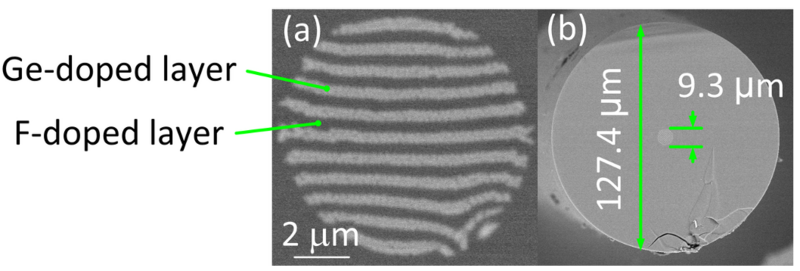
Abstract: The project aims to develop polarization-maintaining (PM) multi-core optical fibers without a stress-applied component (SAP), by utilizing an innovative structure based on an anisotropic pattern applied to each core. It is part of a collaboration with researchers in Warsaw, with whom a single-mode PM silica fiber, named ZEBRA, was recently designed and published. This fiber is based on the stacking of submillimeter-sized rods of fluorine- and germanium-doped silica, inducing refractive index anisotropy within the core. The birefringence thus results solely from the internal structure, without the addition of stress elements or air holes in the cladding.
Adapting this principle to multi-core fibers would offer precise control of optical properties, particularly polarization, for various applications in lensless endoscopy, sensors, as well as fiber lasers and amplifiers. The main challenge lies in ensuring axial alignment and micrometer-level control of the position of all cores within the fiber.
Team: Photonics
PhLAM Project Manager: Monika BOUET
Partners: PhLAM (France), Institut de Microélectronique et Photonique de Varsovie (Pologne)
Abstract: The precise modeling of the refractive index of optical fibers remains a key challenge in the design of new photonic architectures. Despite advances in silica fibers, the ability to uniformly control small refractive index contrasts in core-cladding structures remains limited. To overcome these limitations, alternative processes are being explored, including fabrication by assembling and stacking pure and doped silica rods to reproduce complex refractive index gradients. This nanostructuring technique, based on the Maxwell–Garnett approximation, offers great geometric freedom and the possibility of introducing additional optical properties, such as controlled birefringence. The project aims to extend this concept of submicron structuring to multi-core fibers, which hold promise for advanced photonic technologies.
Team: DYSCO
PhLAM Project Manager: Alberto AMO
Partners: PhLAM
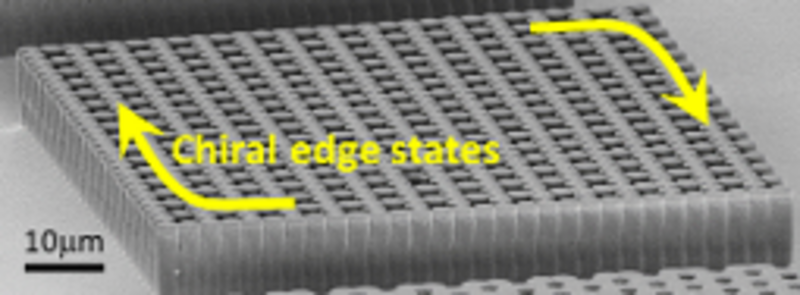
Abstract: Materials that host topological states—exotic phases of matter—have fascinated condensed matter physicists for more than four decades. Until now, the vast majority of topological states observed in solid-state, cold-atom, or photonic systems have been attributed to the dynamics of individual particles. However, the experimental observation of new topological phases arising from strongly correlated particles remains elusive. The European emergenTopo project aims to demonstrate new topological phases in photonic lattices, emerging from the interaction between photons. To achieve this, researchers will utilize various nonlinear photonic platforms and develop new ultrafast detection techniques to study topological excitations. The project aims to deepen our understanding of an emerging field: topological phases of matter in nonlinear photonics.
The development of this project led to the award of an ERC Proof of Concept grant in 2025 for the development of a topological demodulator for THz signals.